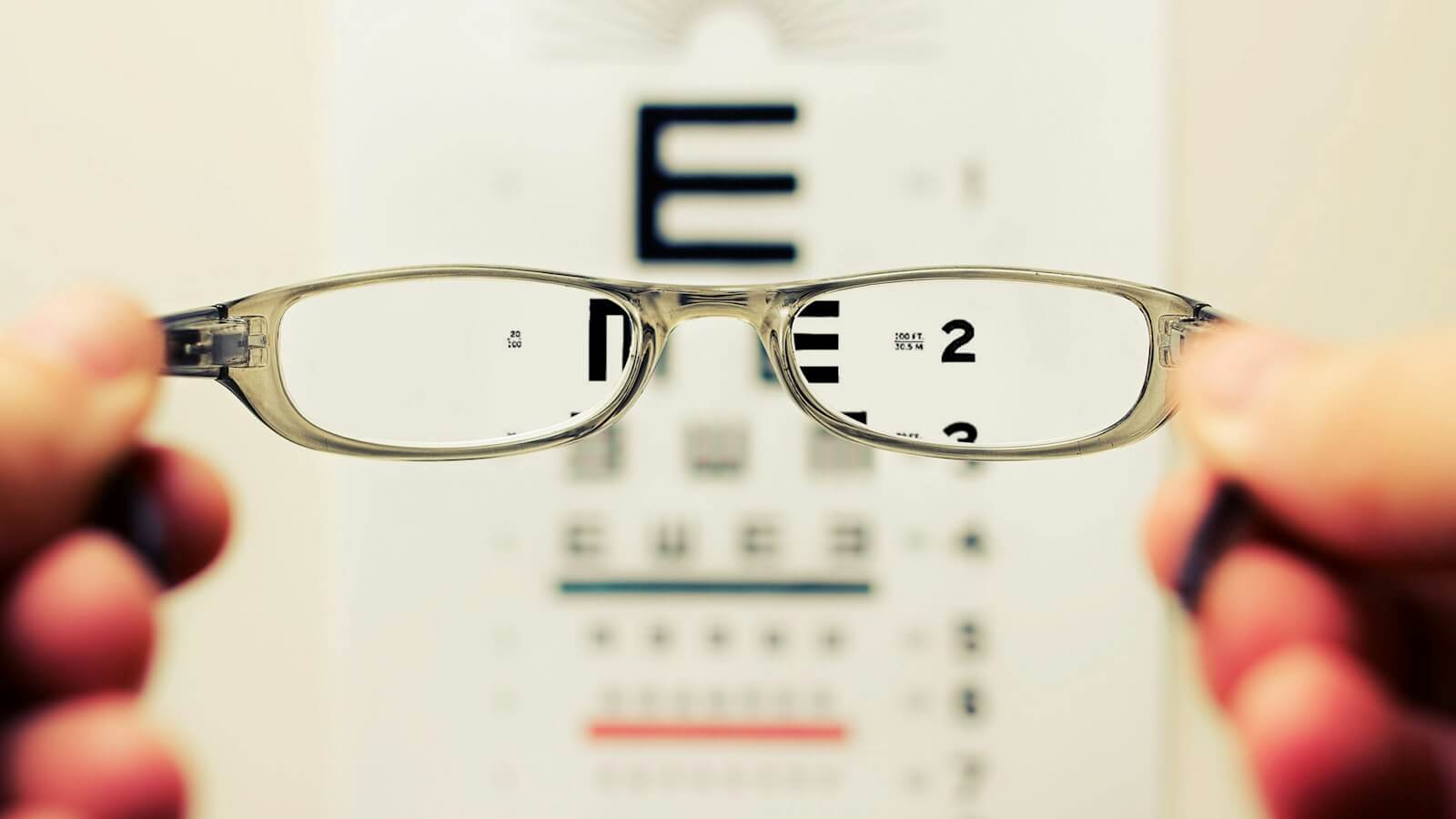
Blurry Vision After 50: Common Causes and What Helps
Short answer: most blurry vision after 50 comes from a handful of common causes, and each has a different fix. Glasses, surgery or eye drops solve most of them; supplements matter for only one. Sudden blurriness is different: see an eye doctor right away.
Common causes at a glance
- Blurry up close, fine far away: presbyopia → reading glasses
- Cloudy vision, glare, faded colors: cataracts → surgery when it gets in the way
- Blur that comes and goes, gritty or burning eyes: dry eye → artificial tears
- Blurry or distorted central vision: possible AMD → dilated eye exam
- Sudden blurriness, new floaters or flashes: see an eye doctor right away
Blurry up close: presbyopia
If small print has started to blur and you find yourself holding your phone or a menu farther away, the likely cause is presbyopia. The National Eye Institute (NEI) says everyone gets it as they get older, usually after age 45. The eye’s lens gradually loses its ability to focus up close. Eye strain and headaches after reading are common too.
The fix is simple: reading glasses, or prescription glasses or contacts as it progresses. No supplement or eye exercise has been shown to reverse it.
Cloudy or dim vision: cataracts
A cataract is a clouding of the eye’s lens. According to the NEI, more than half of all Americans age 80 or older either have cataracts or have had surgery to remove them. Typical signs:
- Cloudy or blurry vision
- Colors that look faded
- Trouble seeing at night
- Lamps, headlights or sunlight that seem too bright
Early on, new glasses can help. Surgery, which replaces the cloudy lens with an artificial one, is the only way to remove a cataract. Supplements don’t treat cataracts.
Blur that comes and goes: dry eye
Dry eye is more common after 50, and in women. It can also be brought on by long hours looking at a computer, tablet or phone. Alongside a scratchy, burning or red feeling, it can also blur your vision.
Over-the-counter artificial tears are the usual first step. For more stubborn cases, doctors can prescribe drops such as cyclosporine or lifitegrast, or recommend tear duct plugs.
Blurry central vision: macular degeneration (AMD)
Age-related macular degeneration damages the macula, the part of the eye responsible for sharp, straight-ahead vision. It’s the cause on this list you most want to catch early, because it often has no symptoms at first:
- Early AMD: usually no symptoms.
- Intermediate AMD: sometimes mild blurriness in the center of your vision or trouble seeing in low light.
- Late AMD: straight lines start to look wavy or crooked, with blurry or blank spots in the center (see what wavy lines can mean).
AMD is more likely after 55, and smoking raises the risk. Only a dilated eye exam can tell you whether you have it and at what stage. For people with intermediate AMD, a specific supplement formula, AREDS2, can slow progression. Our guide to AREDS vs AREDS2 explains exactly what it contains.
The original AREDS trial recommended that people older than 55 have dilated eye exams to find out their risk of developing advanced AMD.
Age-Related Eye Disease Study Research Group. Archives of Ophthalmology, 2001.
If you have diabetes
Diabetic retinopathy damages blood vessels in the retina. The NEI notes it has no symptoms early on; blurry vision and floaters come later. That’s why people with diabetes are advised to get a comprehensive dilated eye exam at least once a year, even if their vision seems fine.
When blurry vision is an emergency
Gradual blurriness can wait for a regular appointment. These can’t:
- Blurry vision that comes on suddenly
- New floaters or flashes of light, which can signal a retinal detachment
- Any sudden loss of vision, even if it lasts only seconds
- Double vision, or blurriness with eye pain
The American Academy of Ophthalmology advises seeing an eye doctor immediately, or going to the emergency room, if any of these happen.
Where a supplement fits
Of the causes above, supplements have real evidence for only one: AMD. The AREDS2 formula slows progression in people with intermediate AMD. It doesn’t sharpen vision, and it doesn’t treat presbyopia, cataracts or dry eye. If you don’t have AMD, no supplement has been shown to prevent it.
Some people still take lutein and zeaxanthin for everyday visual comfort, since a one-year trial found they improved contrast and recovery from glare. If that’s you, these two held up best in our reviews. Neither matches the AREDS2 doses.
Reader-supported: we may earn a commission if you buy through the links below, at no extra cost to you. It never changes a rating.
VisiFlora · 3.4 / 5
Five of the six AREDS2 nutrients. Zinc is below the tested dose and it includes beta-carotene, so it suits people who have never smoked.
Check VisiFlora’s price →VISIVRA · 2.8 / 5
Built around lutein and zeaxanthin plus zinc. Simpler, with no published doses.
Check VISIVRA’s price →See them side by side in VisiFlora vs VISIVRA.
Frequently asked questions
Is blurry vision after 50 normal?
Why is my vision blurry up close but fine far away?
Can vitamins fix blurry vision?
Can dry eyes cause blurry vision?
When is blurry vision an emergency?
How often should I get my eyes checked after 50?
The bottom line
Blurry vision after 50 usually has an ordinary, fixable cause: presbyopia, cataracts or dry eye. The one worth catching early is AMD, which is why a dilated eye exam matters more than any supplement. If you do have intermediate AMD, the AREDS2 formula is the supplement with real evidence behind it.
This article is for informational purposes and isn’t a substitute for medical advice. If your vision changes, especially suddenly, see an eye care provider.
Sources
- National Eye Institute. “Presbyopia.”
- National Eye Institute. “Cataracts.”
- National Eye Institute. “Dry Eye.”
- National Eye Institute. “Age-Related Macular Degeneration.”
- National Eye Institute. “Diabetic Retinopathy.”
- American Academy of Ophthalmology. “Sudden Onset of Blurry Vision.”
- American Academy of Ophthalmology. “Sudden Vision Loss.”
- Age-Related Eye Disease Study Research Group. “A randomized, placebo-controlled, clinical trial of high-dose supplementation with vitamins C and E, beta carotene, and zinc for age-related macular degeneration and vision loss: AREDS report no. 8.” Archives of Ophthalmology, 2001.
- Hammond BR, et al. “A double-blind, placebo-controlled study on the effects of lutein and zeaxanthin on photostress recovery, glare disability, and chromatic contrast.” Investigative Ophthalmology & Visual Science, 2014.
Photo: David Travis / Unsplash