EyeFortin Review: Can a Dropper Rebuild Your Vision? What the Ingredients Show
EyeFortin asks you to consider a nine-ingredient dropper without publishing the amounts. Before you order, see why the evidence leaves us unconvinced.
Reader-supported: some product links may earn us a commission, including the plain official-page link below. That does not change this review’s conclusion.
The comparison shows the published labels, missing amounts and our evidence assessment.Our take before you order
We would pass on EyeFortin for improving eyesight on the evidence reviewed.
- The seller’s receptor-rebuilding explanation is not established by the sources reviewed here.
- Nine ingredients, no amounts: you cannot match the blend to studied doses. Read the medication and safety questions before considering it.
Editorial evidence score: 1.4/5. This is our assessment of the evidence, not a customer rating or a measured treatment result. How we review.
What EyeFortin is
EyeFortin is a liquid supplement taken with a dropper, two droppers each morning, sold through the BuyGoods retail platform. The official page lists nine ingredients in a proprietary blend: niacin, L-glutamic acid, L-tyrosine, taurine, alpha-GPC, D-aspartic acid, Coleus forskohlii extract, eyebright extract and huperzine A. No amounts are published.
What the research says about each ingredient
On a small screen, scroll the table sideways to see every column.
| Ingredient | What the research shows | Evidence |
|---|---|---|
| Huperzine A | Studied for Alzheimer’s disease and memory, in small trials of mostly low quality. Not studied for vision. It acts on acetylcholine, the same pathway targeted by some prescription dementia drugs. | Not for vision |
| Niacin | No vision benefit shown. At high doses it’s linked to blurred vision and swelling of the macula, which reverse when it’s stopped. EyeFortin’s dose isn’t listed. | Caution |
| Coleus forskohlii (forskolin) | Taken with rutin, it slightly lowered eye pressure in glaucoma patients already on treatment. Those trials measured pressure, not sharper vision. | Limited |
| Eyebright | Tested as eye drops for conjunctivitis in one uncontrolled study, not as an oral supplement for eyesight. | Not supported |
| Taurine | Abundant in the retina, but we found no human trials showing that taking it by mouth improves vision. | Not supported |
| L-glutamic acid, L-tyrosine, alpha-GPC, D-aspartic acid | Compounds usually marketed for brain, focus or hormone support. No vision trials. | Not supported |
The “glutamate receptor” claim
The sales page says that spending more time under artificial light damages glutamate receptors in the brain, and that EyeFortin’s compounds “rebuild those receptors.” We found no research establishing that mechanism as a cause of everyday vision loss, or showing that any of these ingredients rebuilds receptors in people.
The page also cites “13,684 reviews” and “more than 107,100 customers.” There’s no way to check those numbers, and they tell you nothing about whether the formula works.
Safety: “for all ages and medical conditions”?
The official FAQ says EyeFortin “has been designed for all ages and medical conditions.” We don’t think a formula with huperzine A and niacin can promise that. Huperzine A works on the same pathway as some prescription drugs, and high-dose niacin has documented eye side effects. With no doses listed, you can’t judge either risk.
If you take any prescription medication, have a heart condition, or are pregnant or breastfeeding, talk to your doctor before trying it.
What to consider instead
If EyeFortin’s liquid format caught your attention, compare the ingredient lists before choosing by format. The two capsule products below list lutein and zeaxanthin, with dose questions of their own.
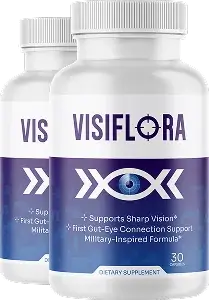
VisiFlora
For a broader listed mix: lutein and zeaxanthin, plus vitamins C and E and copper. Read the missing-dose and beta-carotene notes before choosing.
Check current offers on seller’s site →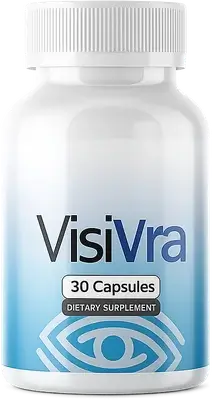
VISIVRA
For a shorter six-ingredient list: lutein, zeaxanthin, bilberry, astaxanthin, zinc and vitamin A. Ask for the amounts and vitamin A source.
Check current offers on seller’s site →Been advised to take AREDS2? Start with our AREDS2 evidence guide and the formula your eye care provider recommends. Neither of these products should be assumed equivalent.
Frequently asked questions
Does EyeFortin work?
Is the glutamate receptor explanation real?
Is EyeFortin safe?
What’s in EyeFortin?
Does EyeFortin have a money-back guarantee?
What should I take instead?
Our buying verdict
We would not buy EyeFortin for its eyesight claims on the evidence reviewed. The missing amounts and unsupported receptor explanation leave too much unanswered. Compare the label details in the alternatives above before making your next purchase decision.
If you want to see the product page for yourself, here is EyeFortin’s official page.
This article is for informational purposes and isn’t a substitute for medical advice. Talk to an eye care provider before starting any supplement, especially if you have diagnosed eye disease or take other medications.
Sources
- Li J, et al. “Huperzine A for Alzheimer’s disease.” Cochrane Database of Systematic Reviews, 2008.
- Fraunfelder FW, et al. “Adverse ocular effects associated with niacin therapy.” British Journal of Ophthalmology, 1995.
- Vetrugno M, et al. “Oral administration of forskolin and rutin contributes to intraocular pressure control in primary open angle glaucoma patients under maximum tolerated medical therapy.” Journal of Ocular Pharmacology and Therapeutics, 2012.
- Stoss M, et al. “Prospective cohort trial of Euphrasia single-dose eye drops in conjunctivitis.” Journal of Alternative and Complementary Medicine, 2000.
- Age-Related Eye Disease Study 2 Research Group. “Lutein + zeaxanthin and omega-3 fatty acids for age-related macular degeneration.” JAMA, 2013.
- EyeFortin official page (ingredient list, FAQ, guarantee), checked November 10, 2026.
- National Eye Institute. AREDS/AREDS2 frequently asked questions, checked November 10, 2026.
Photo: Kelly Sikkema / Unsplash